On the colour of pomegranates...
I first encountered Sergei Parajanov's film 'The Colour of Pomegranates' as a child, catching glimpses of a rare late-night TV screening. I remember being haunted by its rich, mysterious imagery – but had no idea what I'd seen. Many years later, working at the Institute of Contemporary Arts in London, I found it again and was overjoyed. Its grip on me was still as potent as in those first childhood glimpses.
The film is a loose retelling of the life of poet Sayat Nova, who travelled the Caucasus as an ashugh – a troubadour sharing songs of love and life in the 1700s. (Ashugh derives from the arabic ʿāshiq, meaning lovelorn.) A biography like no other, the film is a series of symbols and tableaux of stunning visual imagery. At first banned by the Soviets in 1963 – and its director imprisoned – it has since come to be recognised as perhaps the most beautiful film ever made.
As Nova interpreted his love stories in song, and Parajanov added his own layers of visual poetry, this series adds my personal layer of interpretation – bringing the film's magical imagery into physical form in clay, bronze and gold.
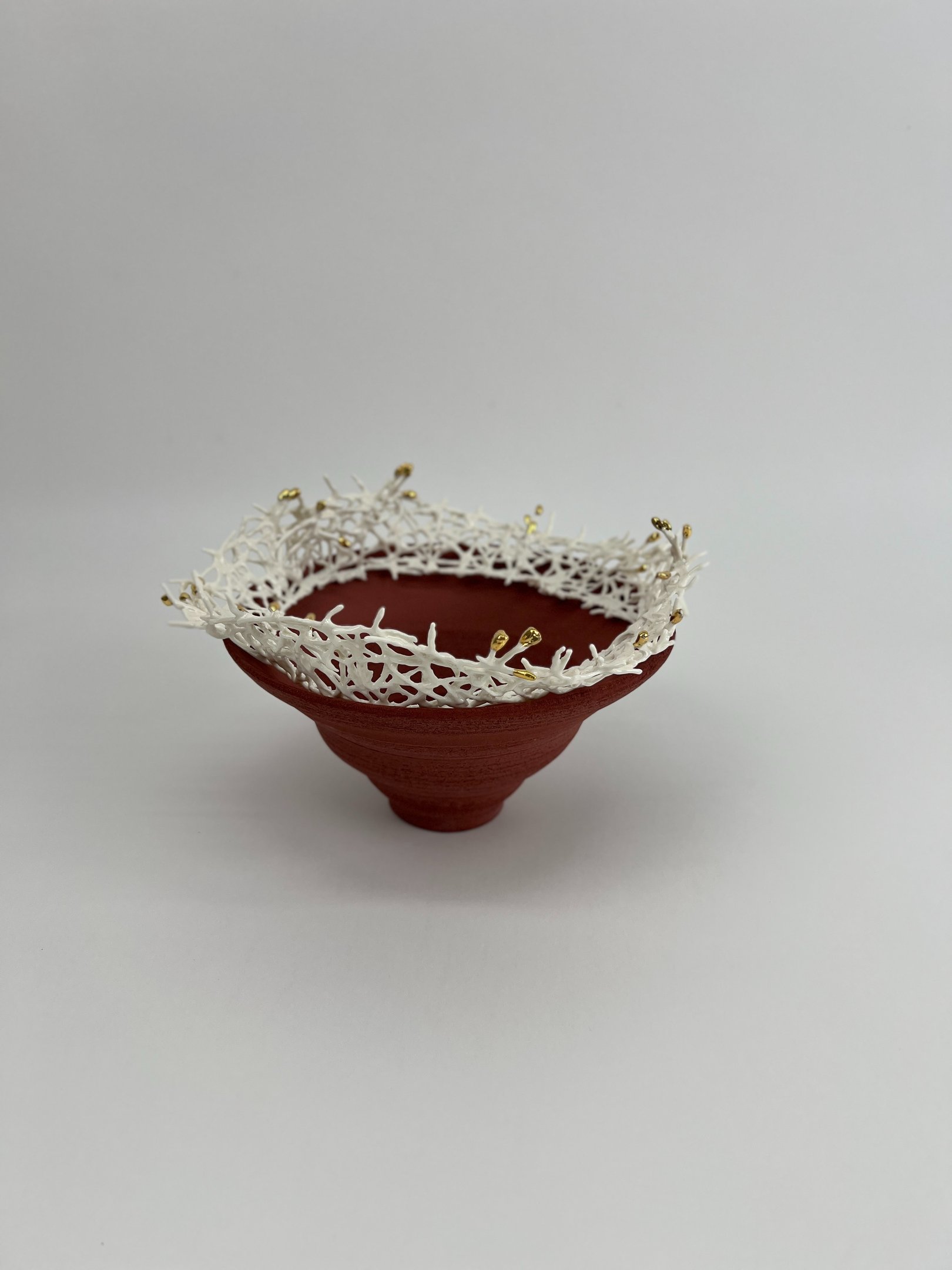
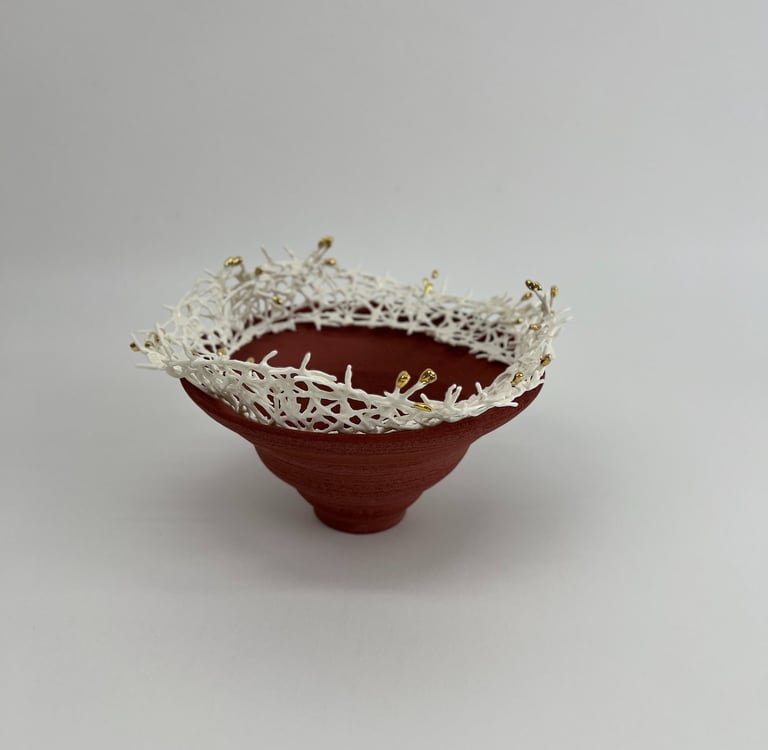
Gilded thorn vessel
Stoneware, porcelain, 20ct gold lustre.
28 x 28cm
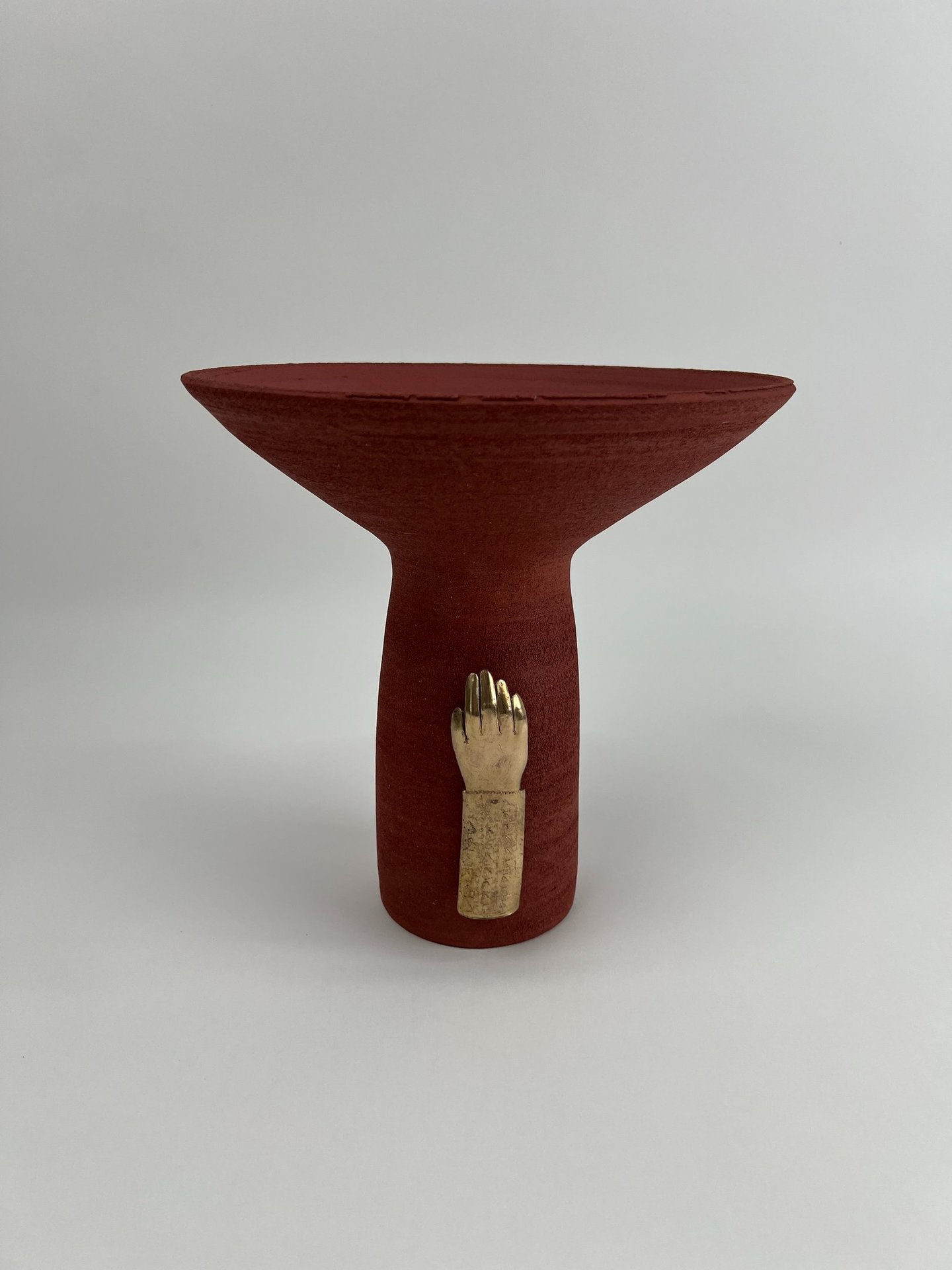
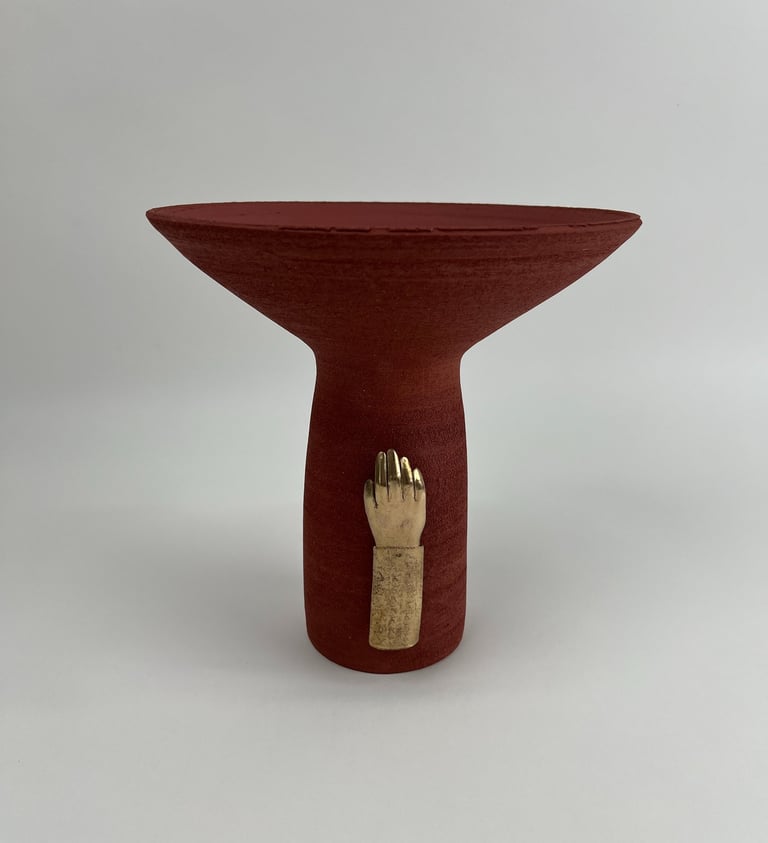
The right hand of Gregory the Illuminator
Stoneware, bronze. 28 x 28cm
“I will take revenge on the world through love”
– Sergei Parajanov